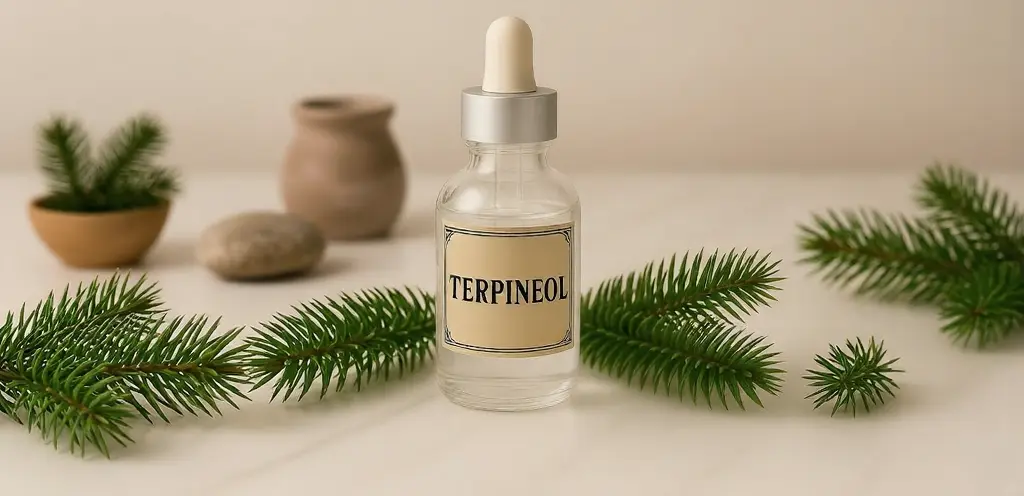
Terpineol is a naturally derived monoterpene alcohol recognised across the aroma chemical industry for its pleasant lilac-like aroma, subtle floral profile and broad formulation utility. Found in pine oil and other essential oils, it remains an important ingredient for manufacturers serving fragrance, flavour, personal care, cleaning and specialty chemical applications.
At Himachal Terpene Products Pvt. Ltd., Terpineol is presented as a professional industrial material rather than a generic fragrance ingredient. Buyers typically assess it for aroma quality, purity consistency, process compatibility and packaging suitability, especially when the product is being used in commercial formulations at scale.
Product Details
- Product Name: Terpineol
- Molecular Formula: C10H18O
- Molecular Weight: 154.20
- CAS No.: 8000-41-7
- HSN Code: 2902
Key Specifications
- Appearance: A clear, colorless slightly viscous liquid
- Odor: Pleasant and characteristic
- Specific Gravity at 27 degrees C: 0.925 to 0.940
- Solubility: Soluble in alcohol
- Refractive Index at 27 degrees C: 1.480 to 1.485
- Alpha Terpineol: NLT 70%
- Total Terpenes Alcohol: NLT 98%
- Optical Rotation: -37 to +37
Why Terpineol Matters in Industrial Formulations
Terpineol is valued for its natural lilac scent and balanced floral-pine character. In perfumery and cosmetics, this profile helps deliver a refined aromatic note while supporting blend performance. In room fresheners and air-care products, it contributes recognisable fragrance character with broad commercial acceptance.
Its use extends beyond aroma. In cleaners, polishes, paints, inks and coatings, Terpineol also serves as an aromatic solvent and functional formulation ingredient. Because it readily dissolves oils and resins, formulators often consider it where both solvency and sensory character are commercially relevant.
Application Areas
- Fragrance: Used in perfumes, colognes, cosmetics and room fresheners for its pleasant lilac-like aroma.
- Flavour: Used in selected food and beverage flavour applications where a controlled aromatic note is required.
- Home Care: Applied in cleaners, polishes and similar formulations where aroma and solvent function work together.
- Industrial Products: Used in paints, inks, coatings and adhesive-related formulations as an aromatic solvent and process-support ingredient.
- Pharmaceutical and Personal Care: Considered in certain balms and specialty personal care applications.
Natural Source and Production Route
Terpineol occurs naturally in pine resin and in essential oils such as pine and eucalyptus. Industrially, it is commonly produced by hydrating alpha-pinene derived from pine-based turpentine streams. Alternative production routes may also involve citrus-derived limonene feedstock or isolation from natural oil fractions. For industrial buyers, this origin profile supports the product's position as a renewable terpene-based material.
Functional and Commercial Advantages
- Natural Source: Derived from terpene feedstocks associated with pine and other plant-based sources.
- Aroma Profile: Pleasant floral and pine-like odour suited to fragrance-focused formulations.
- Solvent Value: Useful for dissolving oils and resins in selected industrial formulations.
- Low-Toxicity Positioning: Often viewed as a more formulation-friendly option than heavier petroleum-based aromatic solvents.
- Biodegradability Potential: Relevant for buyers looking at bio-based or terpene-linked ingredient choices.
Packaging Options for Industrial Supply
HTPPL presents Terpineol in packaging formats suited to both standard dispatches and bulk industrial supply chains. Available formats include GI drums, HDPE drums, SS drums, SS tankers and ISO tankers. This flexibility is important for buyers planning batch manufacturing, bulk transfers or export-oriented logistics.
Why Buyers Evaluate HTPPL for Terpineol
Industrial buyers generally assess a Terpineol supplier on quality consistency, specification clarity, documentation support, supply reliability and packaging flexibility. HTPPL's position as a long-established terpene manufacturer supports these requirements for customers looking for professional supply partnership instead of one-time spot purchasing.
For direct product review and enquiries, buyers can also visit the main Terpineol product page.
Frequently Asked Questions
1. What is Terpineol used for in industry?
Terpineol is used in perfumes, cosmetics, room fresheners, flavour formulations, cleaners, polishes, paints, inks, coatings, adhesives and selected pharmaceutical and personal care applications.
2. What are the key specifications of HTPPL Terpineol?
HTPPL Terpineol is described as a clear, colorless slightly viscous liquid with pleasant characteristic odour, specific gravity at 27 degrees Celsius of 0.925 to 0.940, refractive index at 27 degrees Celsius of 1.480 to 1.485, Alpha Terpineol NLT 70 percent and Total Terpenes Alcohol NLT 98 percent.
3. What gives Terpineol its commercial importance in fragrance and flavour applications?
Terpineol is valued for its pleasant lilac-like aroma with subtle floral and pine notes. This makes it commercially useful in perfumes, cosmetics, room fresheners and selected flavour systems where aroma character and formulation performance both matter.
4. What packaging options are available for Terpineol?
HTPPL presents Terpineol packaging options including GI drums, HDPE drums, SS drums, SS tankers and ISO tankers, allowing support for both drum quantities and bulk industrial supply requirements.
5. How should buyers can get a Turpentine Oil BP supply?
Buyers can easily request a supply by clicking on the “Get a Quote” button on our website. Alternatively, you can directly contact us via WhatsApp at 9816380001. For complete product details, visit the product page Terpineol product.